Written by Jen Owen, our Nurse Practitioner at the Flourish Center in Portland, OR.
Creatine is having a moment—and for good reason. While it’s often associated with athletes and bodybuilders, this well-researched compound is gaining attention for its broader health benefits, especially for women navigating perimenopause and menopause.
Let’s break it down.
What Is Creatine?
Creatine is a naturally occurring compound found in your muscles and brain. It’s made from amino acids and helps your body produce energy—specifically during short bursts of activity like lifting weights, climbing stairs, or even getting up quickly from a chair.
You also get small amounts of creatine from foods like red meat and fish, but supplementation can help increase your body’s stores more effectively.
Creatine in Perimenopause and Menopause
As women enter perimenopause and menopause, the body undergoes significant hormonal changes—particularly a decline in estrogen. This shift can impact:
- Muscle mass and strength
- Bone density
- Energy levels
- Cognitive function
Here’s where creatine becomes especially interesting.
1. Supports Muscle Mass & Strength
Loss of lean muscle (sarcopenia) accelerates during midlife. Creatine helps improve muscle strength and performance, especially when paired with resistance training.
2. May Support Bone Health
While creatine doesn’t directly build bone, stronger muscles can improve bone-loading activities, which helps maintain bone density.
3. Enhances Energy & Reduces Fatigue
Many women report increased fatigue during this stage of life. Creatine supports cellular energy production, which may help improve overall vitality.
4. Potential Cognitive Benefits
Emerging research suggests creatine may support brain health, memory, and mental clarity—areas that can be affected during hormonal transitions.
Creatine and the Physical Activity Pillar of Lifestyle Medicine
In Lifestyle Medicine, physical activity is one of the core pillars of long-term health. Movement is essential for:
- Cardiovascular health
- Metabolic balance
- Mental well-being
- Longevity
But here’s the key: we need to support the body so it can move well.
Creatine can play a supportive role by:
- Improving strength and exercise capacity
- Enhancing recovery from workouts
- Making resistance training more effective
This is especially important in midlife, when maintaining muscle becomes critical for independence, metabolism, and overall resilience. Additionally, creatine works great for anyone on a plant-based diet.
What We Recommend in the Clinic
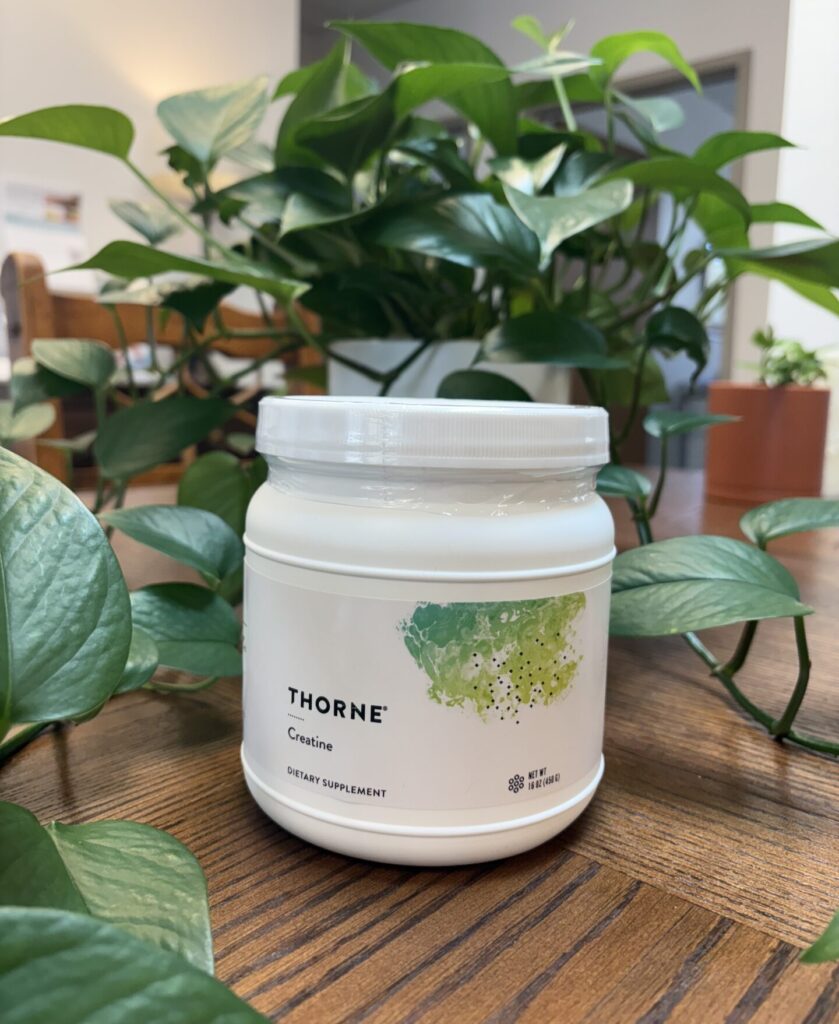
At our clinic, we prioritize high-quality, evidence-based supplements. The creatine we carry is from Thorne, a brand known for its rigorous testing and commitment to purity. If you’re considering creatine, we always recommend discussing it with your provider to ensure it fits your individual health needs and goals.
Dive Deeper
Want to dive deeper into the role of movement in your health? Explore these two blogs, where Jen breaks down the physical activity pillar of lifestyle medicine and shares how strength and cardio training can support longevity and help you feel your best for years to come.
The Power of Movement: Physical Activity as a Lifestyle Medicine Pillar
Strength and Cardio Training for Longevity